
Glass-studio guides from My Glass Cookbook.
Plain-language articles for fused, kilnformed, and stained glass artists. Learn how glass behaves, how studio choices connect, and how to build calmer habits around compatibility, firing, materials, notes, and testing.
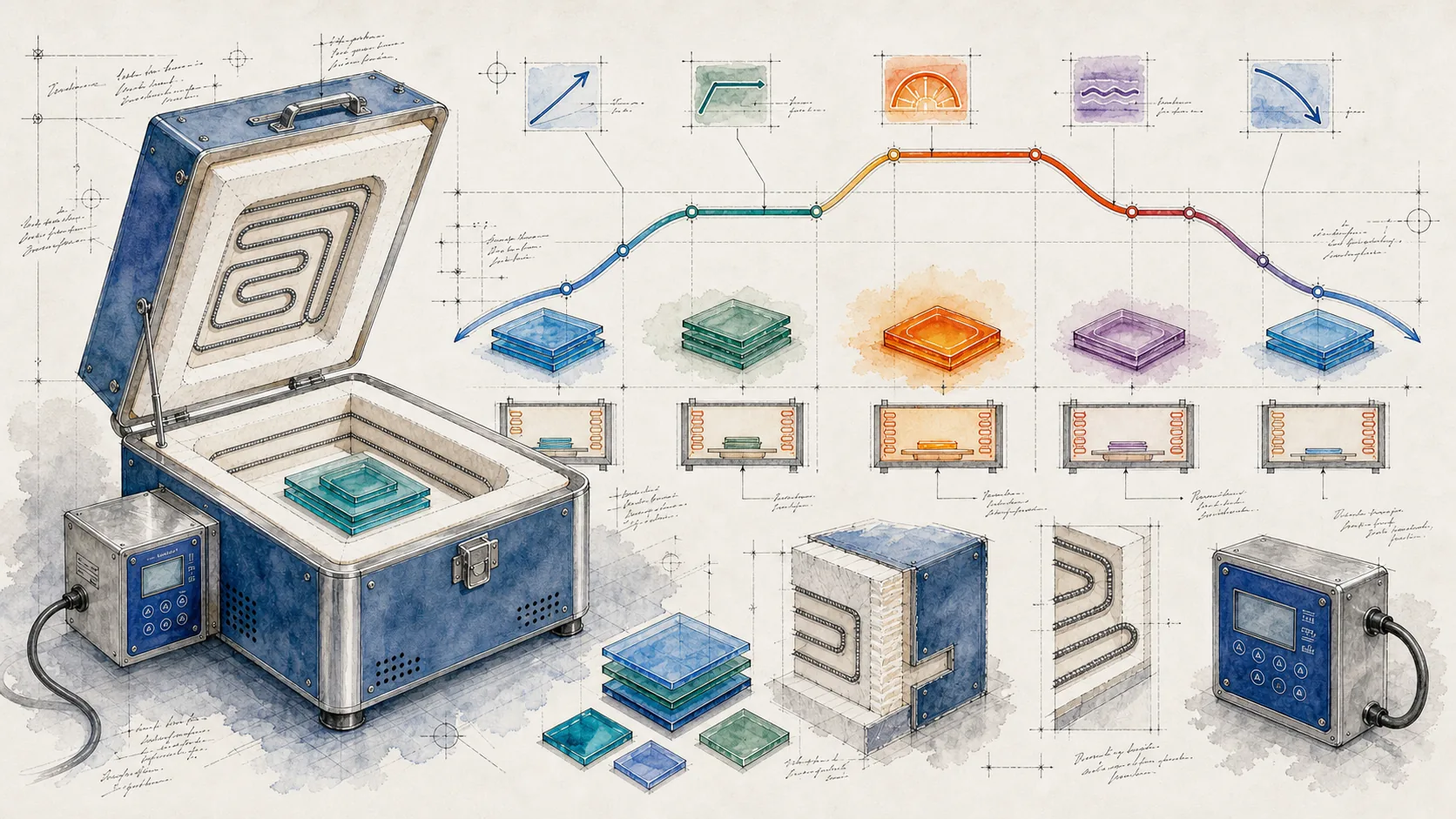
01 / Kiln basics
What Is a Kiln Schedule?
A plain-language foundation for reading a firing schedule as a map of heat over time — not just a peak temperature.
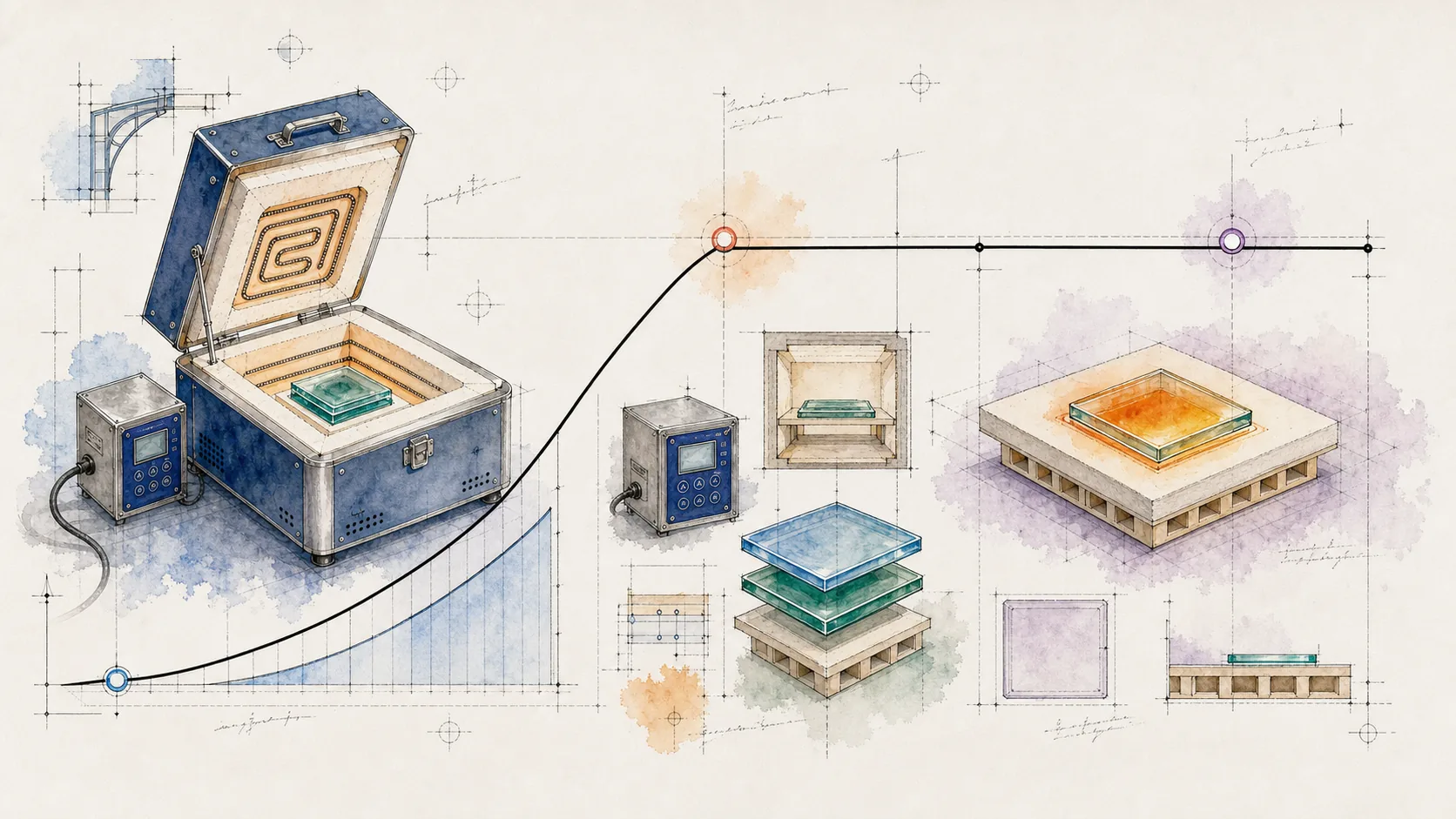
02 / Schedule anatomy
Rate, Target, Hold: The Three Building Blocks of a Kiln Schedule
How to read each segment of a kiln schedule and understand what the kiln is being asked to do next.
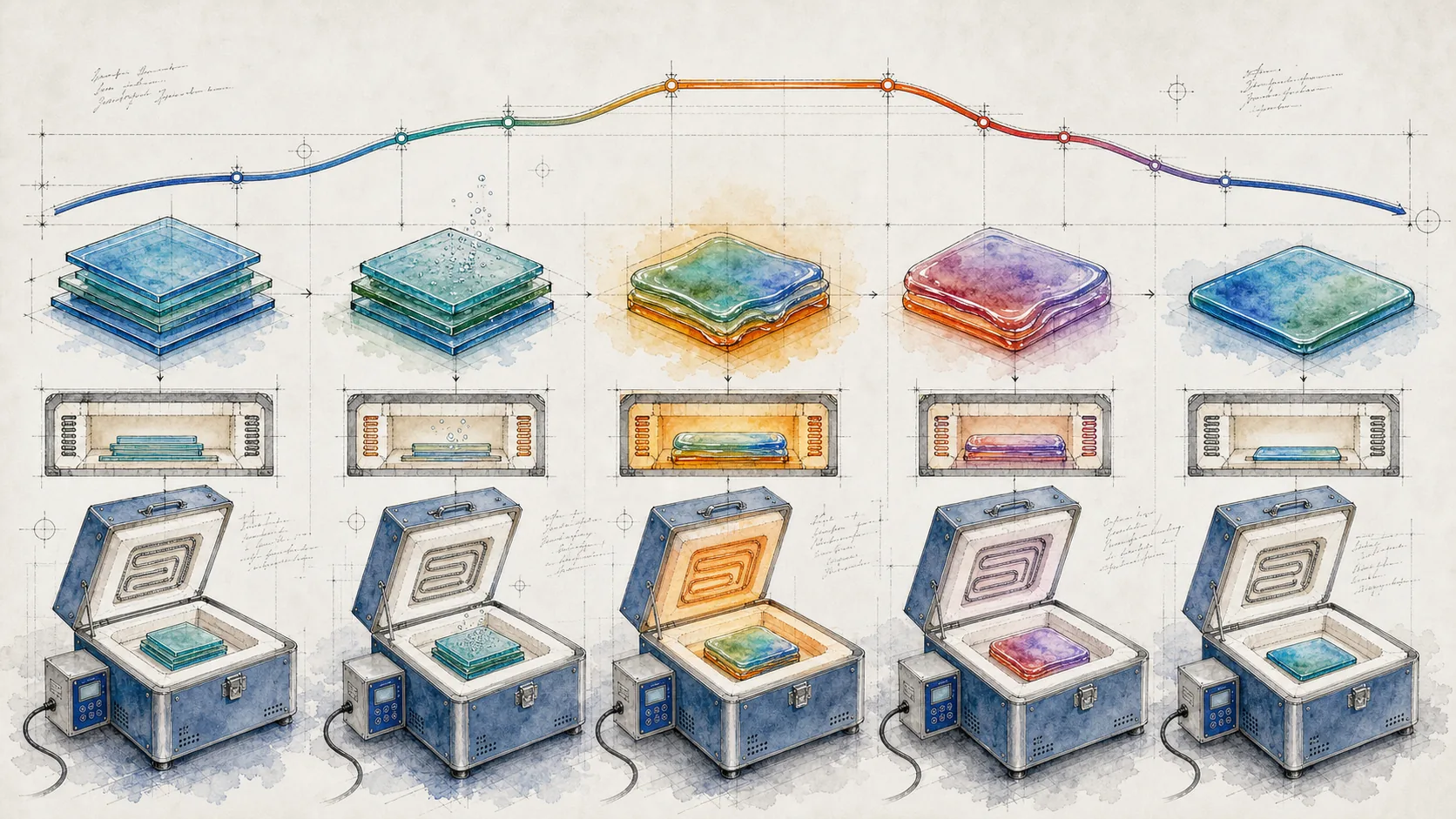
03 / Firing journey
The Five Phases of a Fused-Glass Firing
A practical map of heat-up, bubble squeeze, forming, cooling toward anneal, and annealing/cooling.
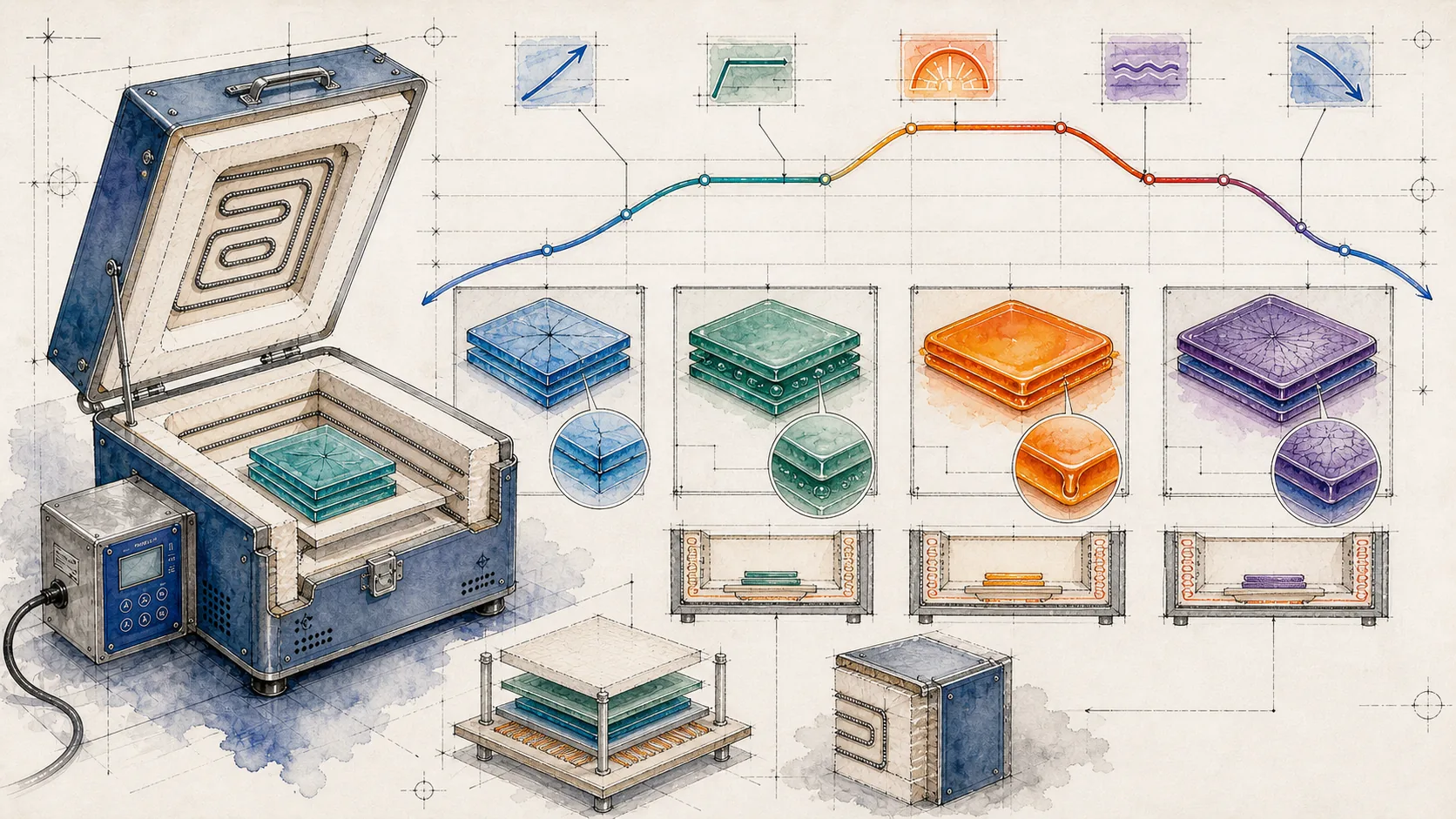
04 / Troubleshooting
Why Kiln Schedules Go Wrong
A practical guide to the common failure patterns behind kiln schedule problems, from thermal shock and trapped air to excess heatwork and poor annealing.
05 / Schedule literacy
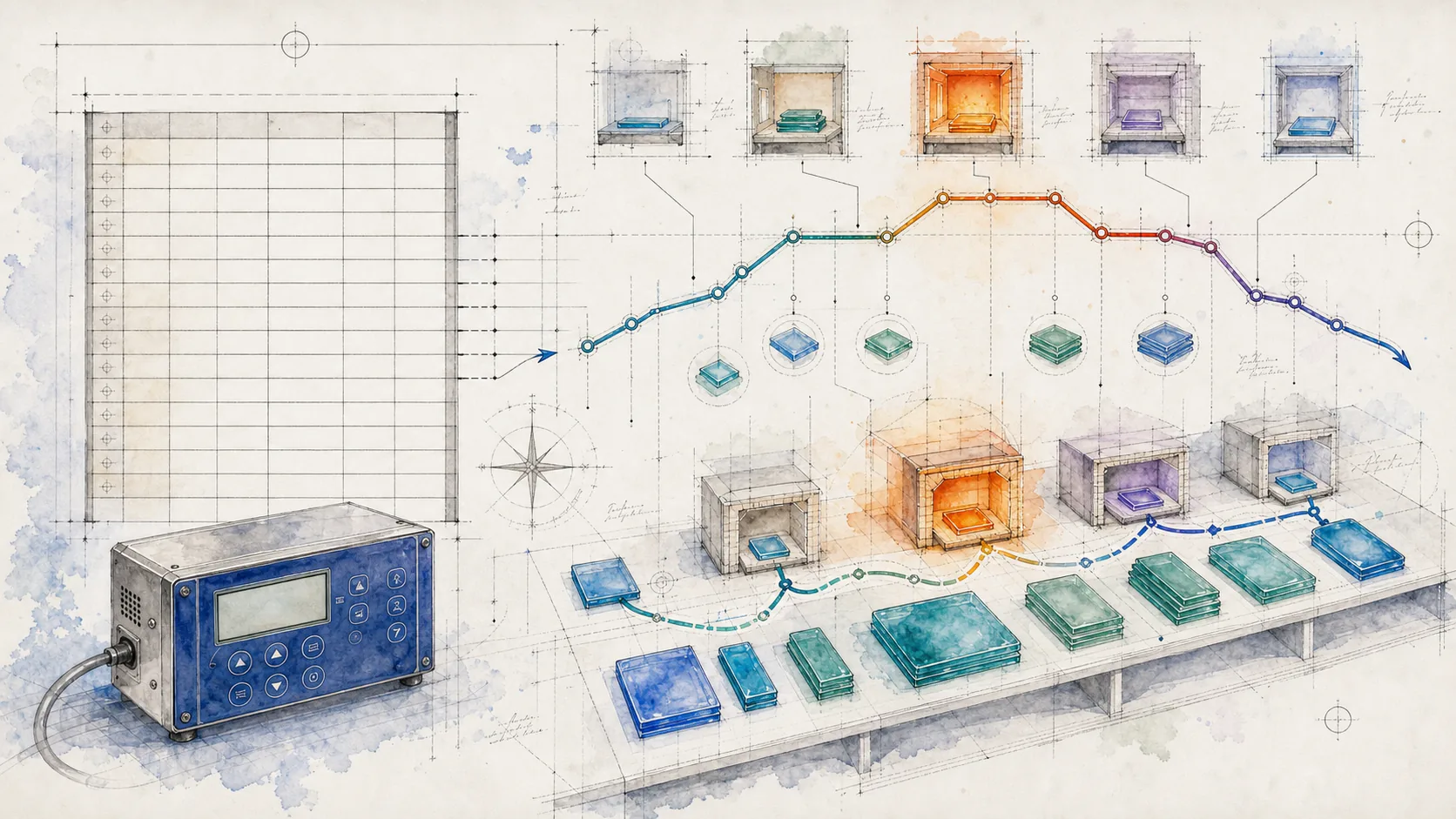
Reading a Kiln Schedule Like a Map
How to turn a kiln schedule table into a mental heat curve, so each segment reads like a clear studio instruction.
06 / Process guide
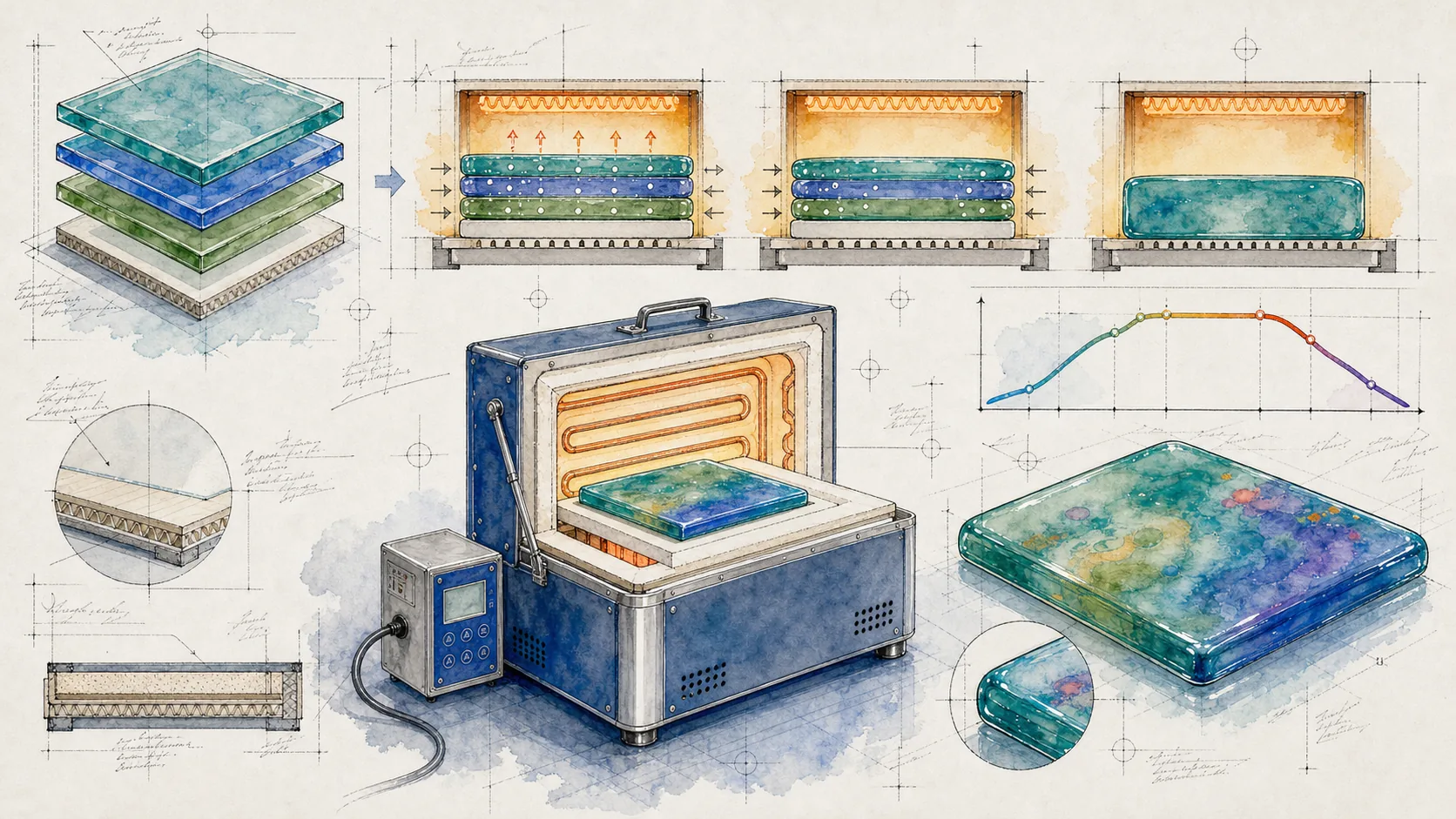
Full Fuse Explained
What a full fuse is trying to do, why bubble squeeze matters, and how heatwork, hold time, thickness, and annealing shape the final smooth result.
07 / Process guide
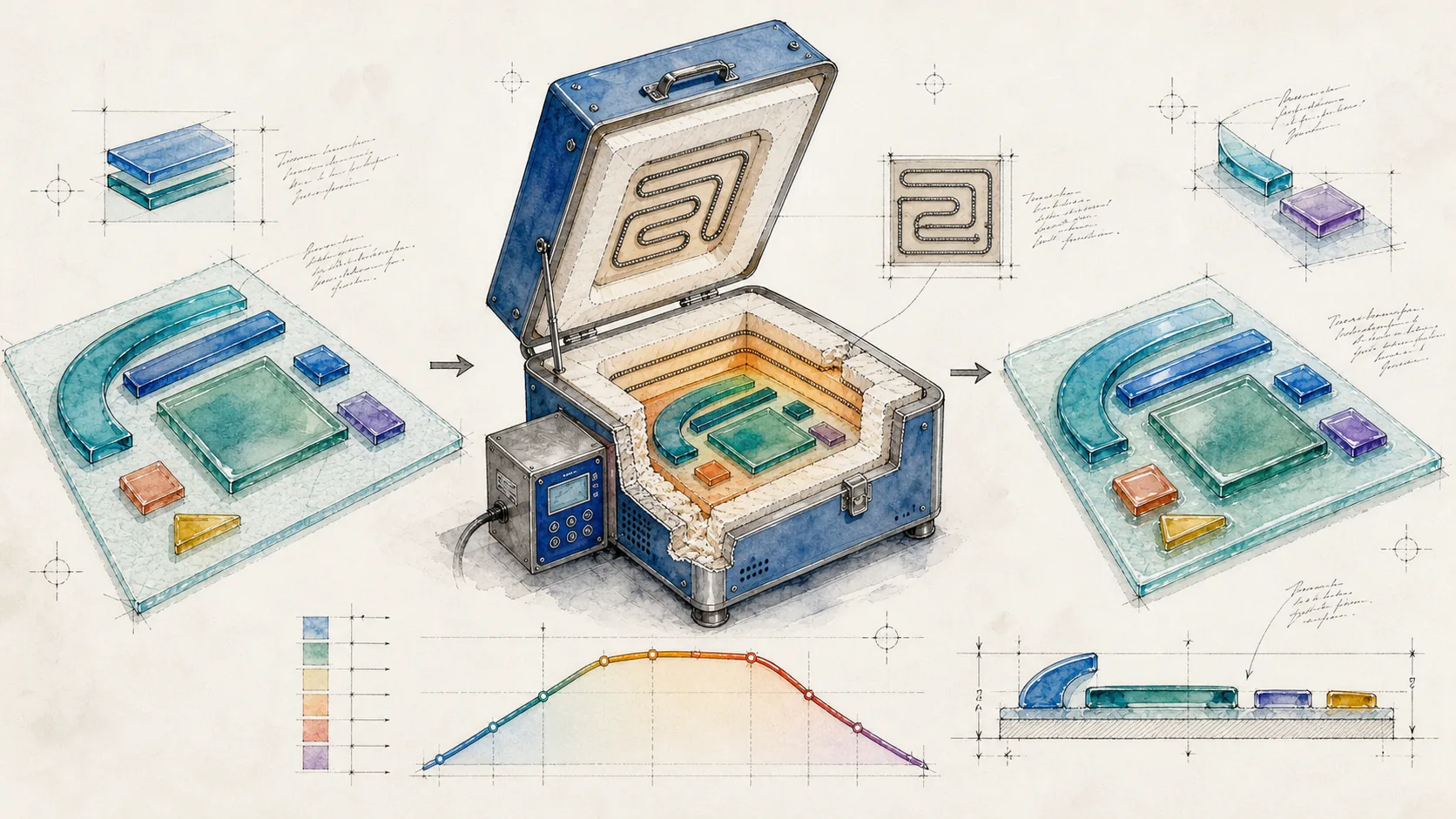
Tack Fuse Explained
What tack fusing is for, how it differs from contour and full fuse, and how schedule choices affect texture, bonding, bubbles, and annealing.
08 / Process guide
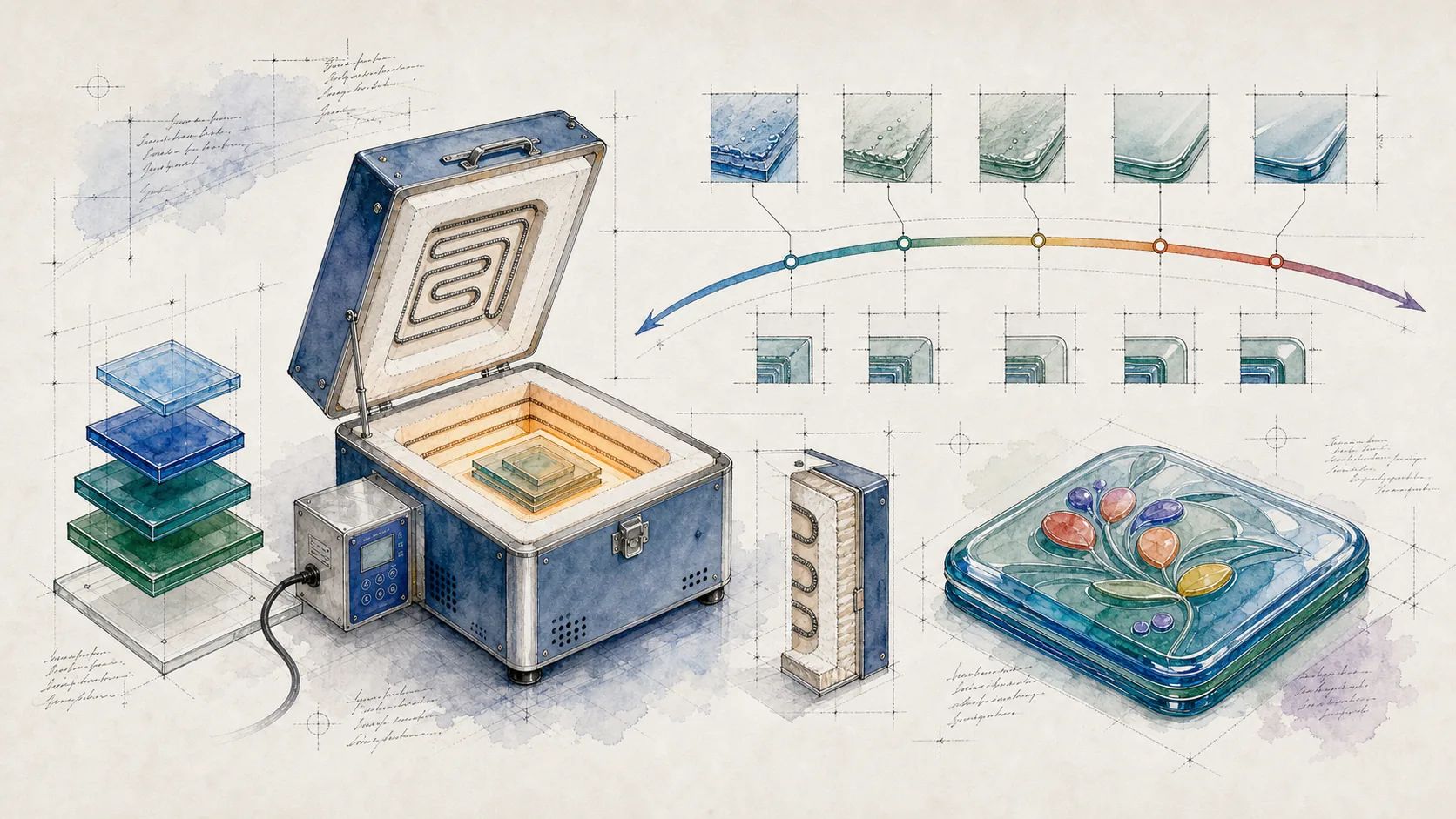
Contour Fuse Explained
How contour fuse bridges texture and smoothing, why total heatwork matters, and how to use it when tack is too sharp but full fuse is too flat.
09 / Process guide
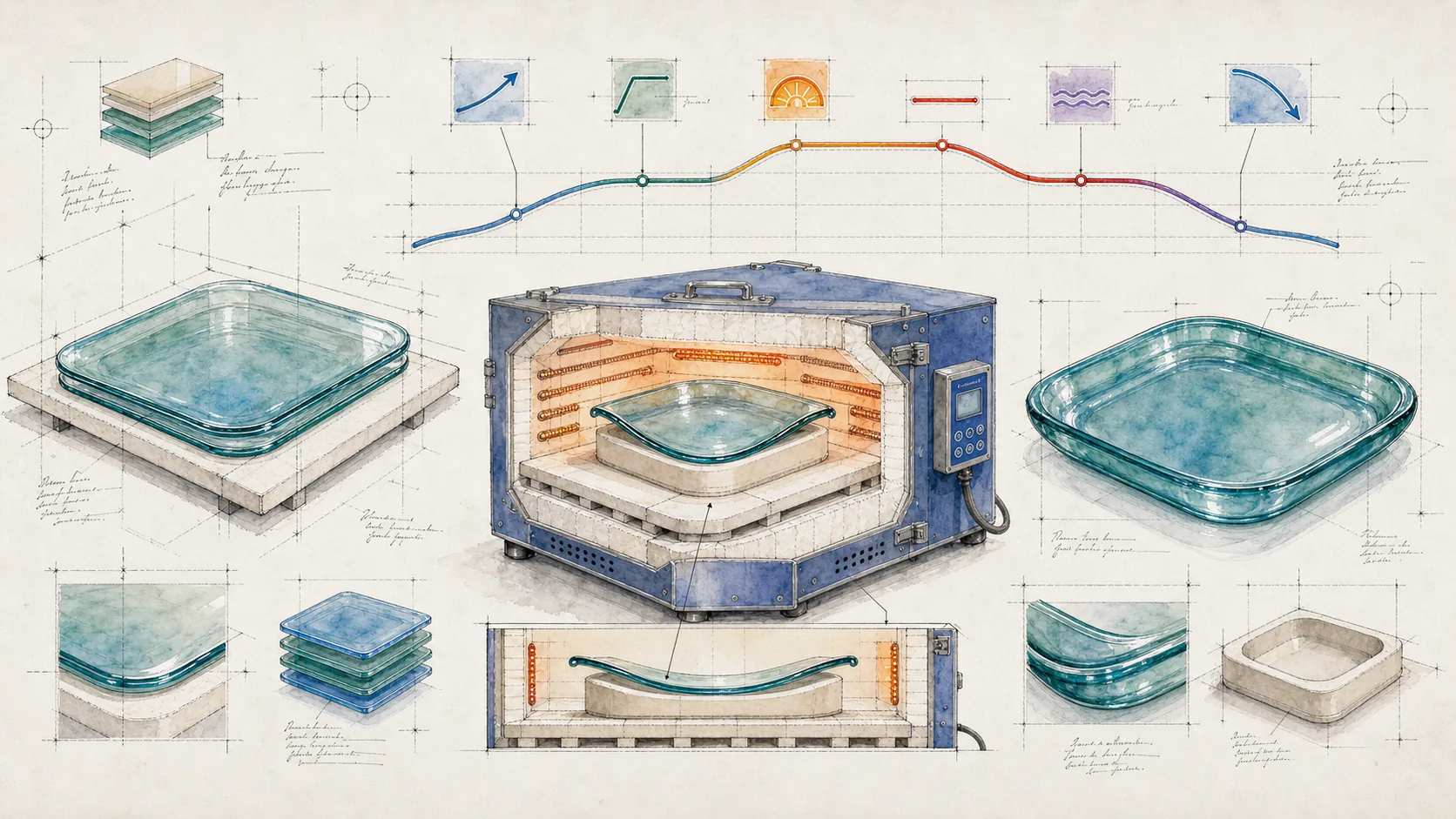
Slumping Explained
What slumping does, why mold choice and timing matter, and how to read a slump schedule as a careful shape-forming firing.
10 / Process guide
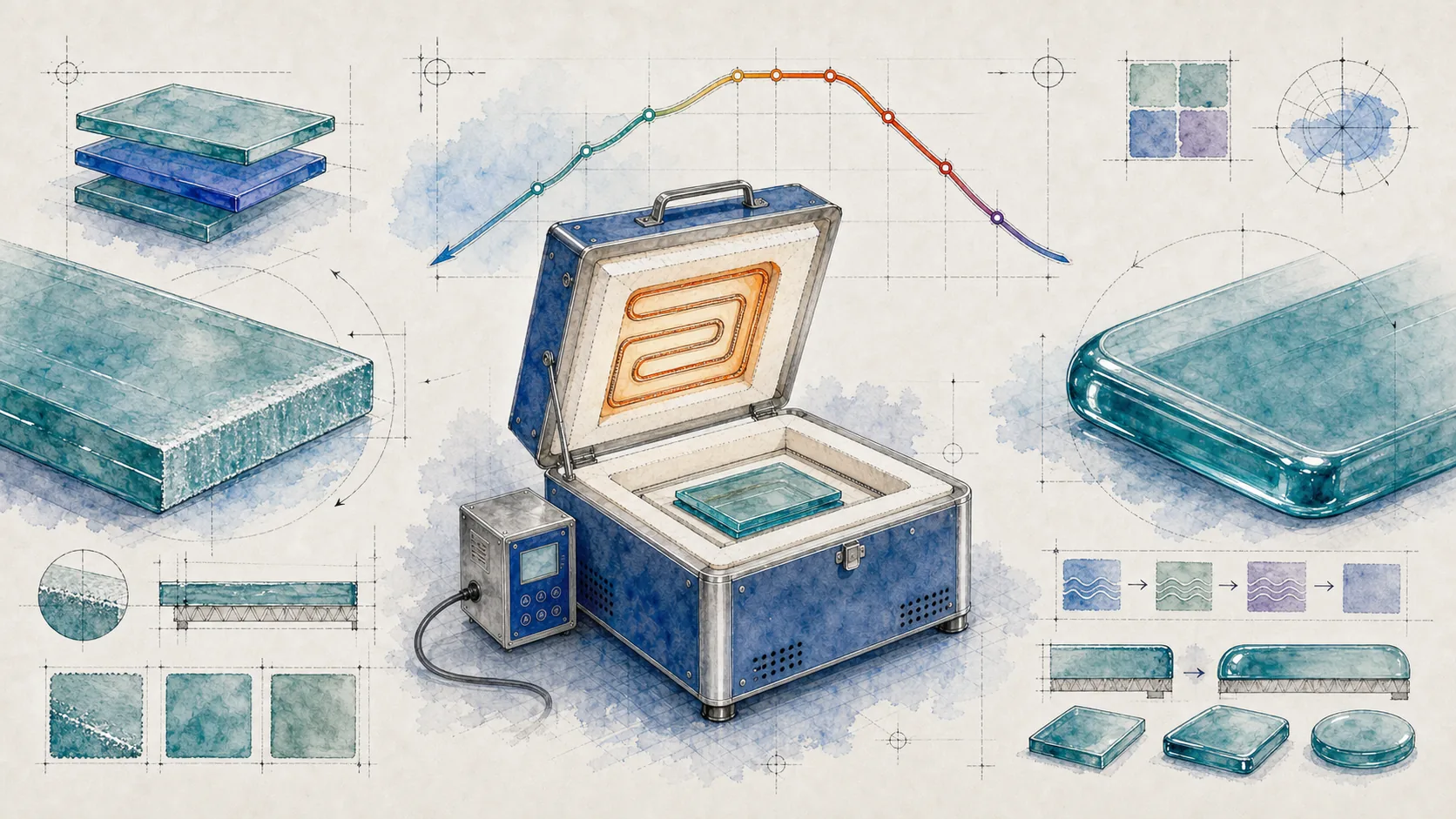
Fire Polish Explained
How fire polishing differs from full fuse, tack fuse, and slumping, and why surface repair still needs schedule discipline and annealing.
11 / Schedule strategy
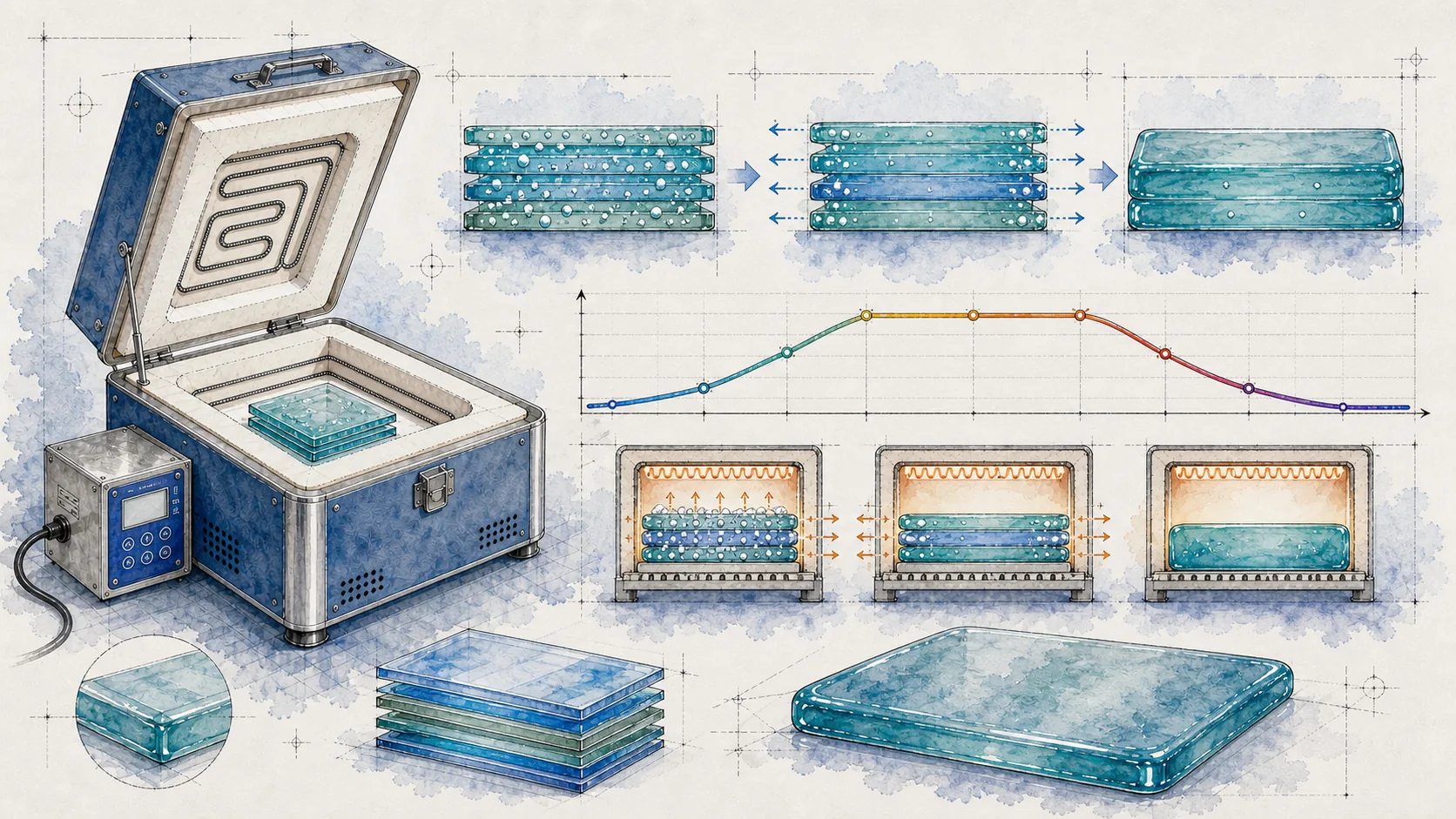
Bubble Squeeze Explained
How bubble squeeze works, what it can and cannot fix, and how construction choices and schedule choices cooperate to reduce trapped air.
12 / Advanced schedule care
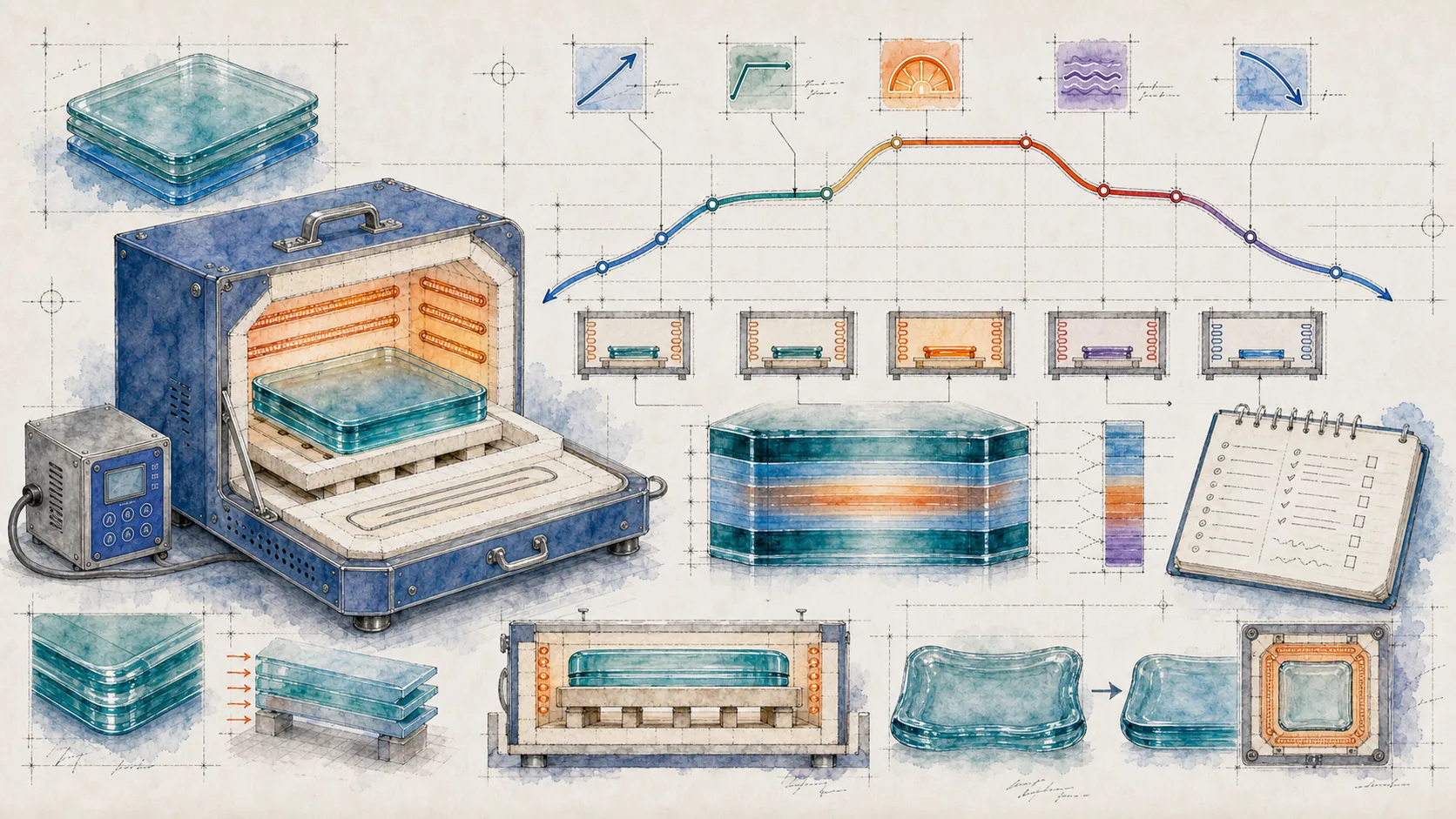
Thick Glass and Re-Firing
Why thick glass heats, anneals, and re-fires differently, and how to think about mass, stress, and cumulative kiln history.
13 / Special processes
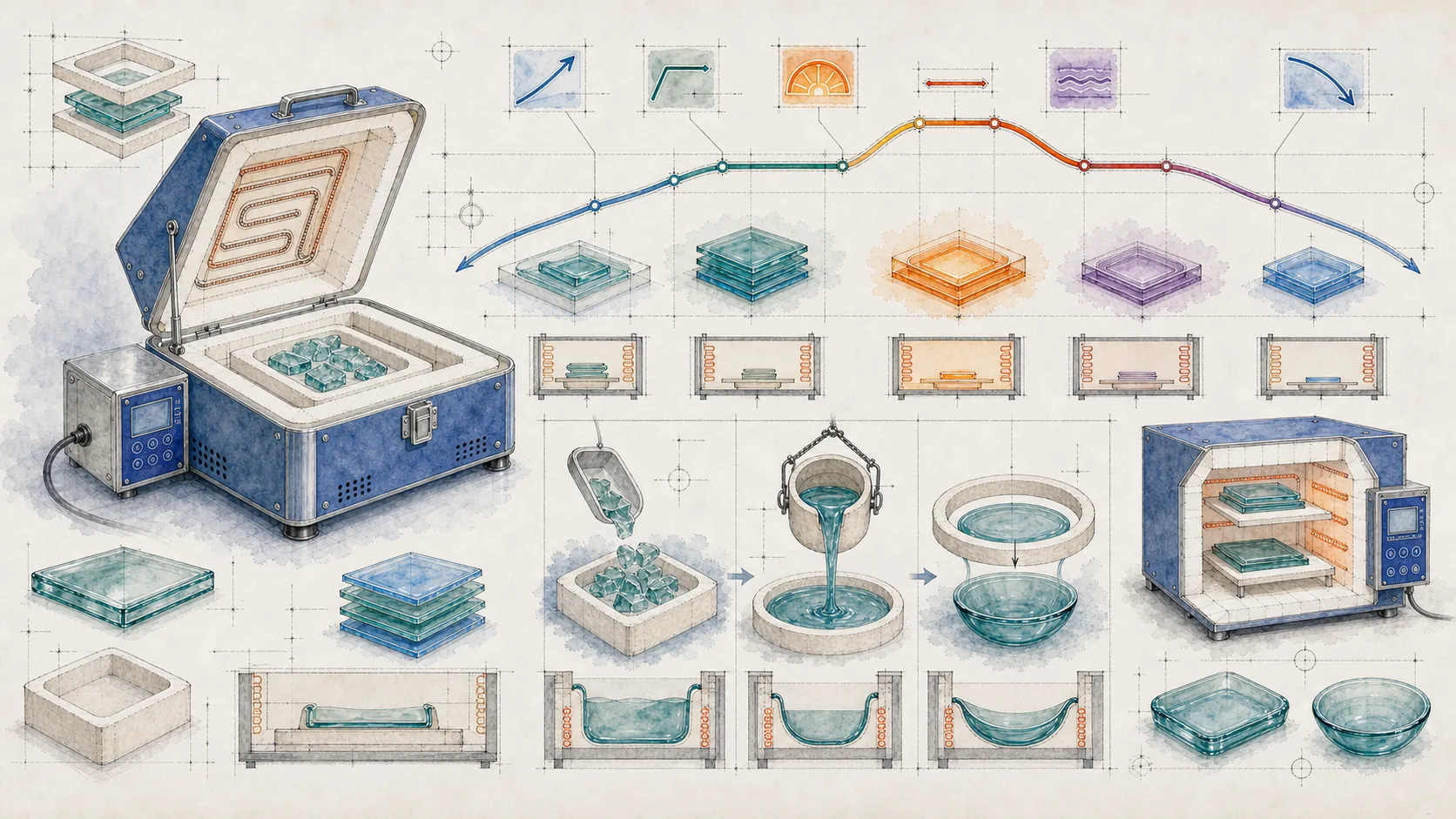
Casting, Pot Melt, and Drop-Out Schedules
A high-level guide to reading special-process schedules where glass flows, drops, or fills a form instead of simply bonding or bending.
14 / Decision guide
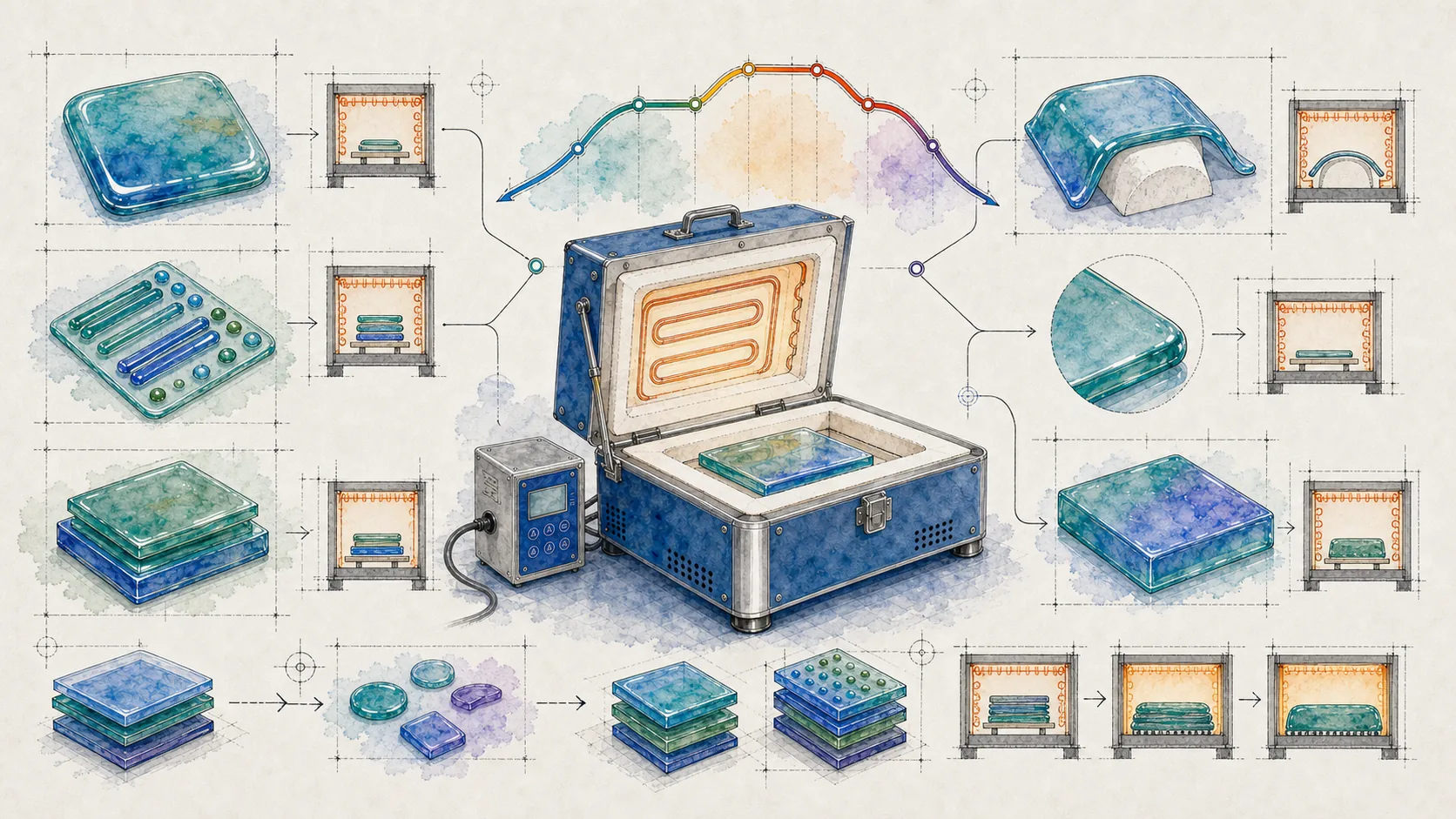
How to Choose the Right Kiln Schedule Preset
A practical decision framework for choosing between full fuse, tack fuse, contour fuse, slump, fire polish, bubble strategy, thick-glass, and special-process schedules.
15 / Glass compatibility
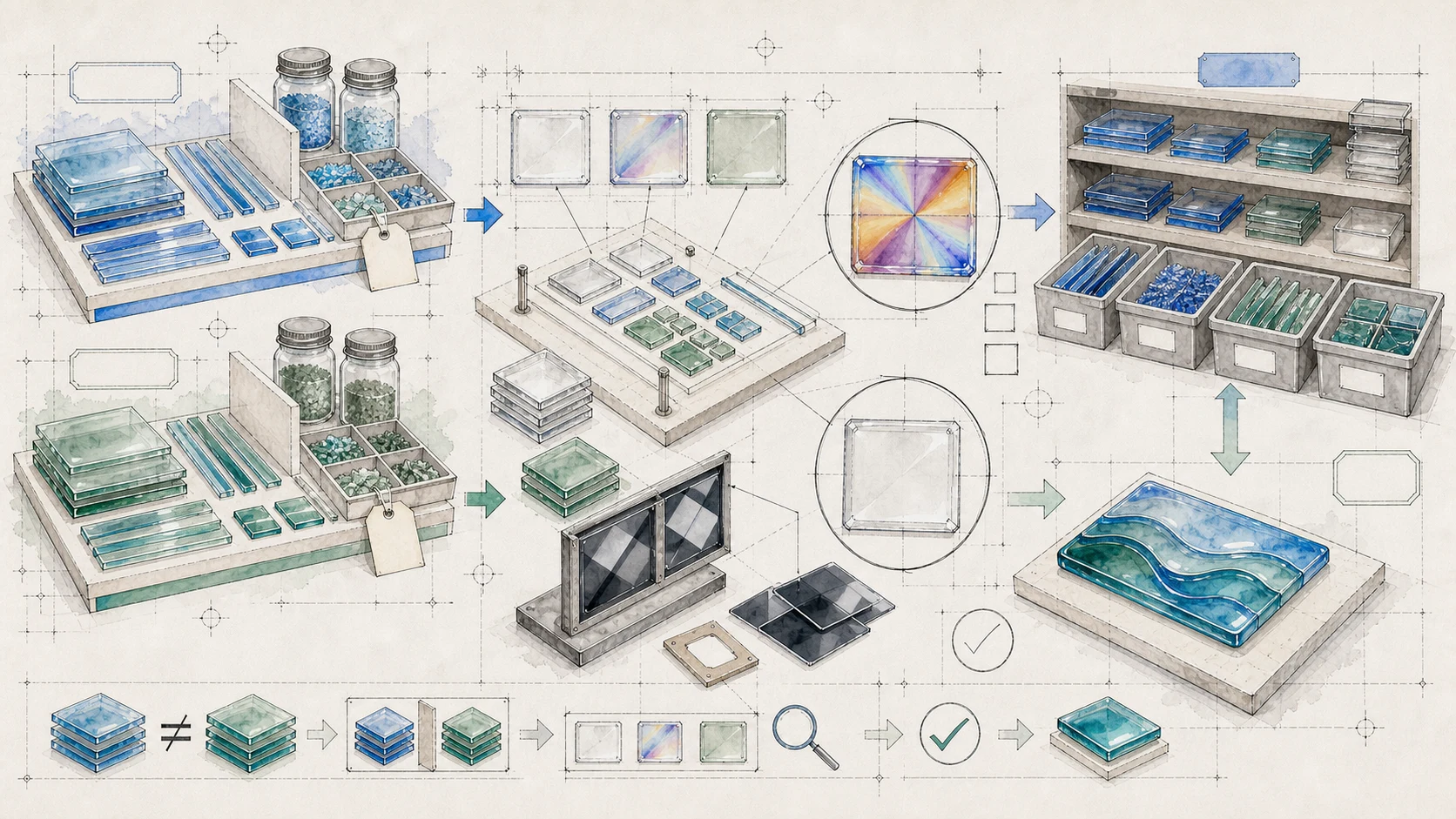
Compatible Is Not Interchangeable: A Beginner’s Guide to COE and Tested Compatibility
A calm beginner guide to COE, tested compatible glass, brand systems, stained glass caution, simple test tiles, and why matching numbers does not automatically make glass interchangeable.