
Fire polishing is a small-looking process with real schedule consequences. The goal is usually not to fuse layers together or change the whole shape of the piece. The goal is to bring the glass surface just far enough into heat for dullness, scratches, or coldworked edges to soften and regain a cleaner finish.
That makes fire polish feel tempting as a quick fix, but it is still a firing. The same kiln habits apply: protect the work on the way up, avoid giving the surface more heatwork than it needs, and anneal for the actual thickness and shape of the piece.
The safest way to read a fire-polish schedule is as a controlled surface visit. You are asking the glass to respond at the skin, not to fully relax, slump, or flow.
01 / The desired result
Fire polish is about surface, not reshaping.
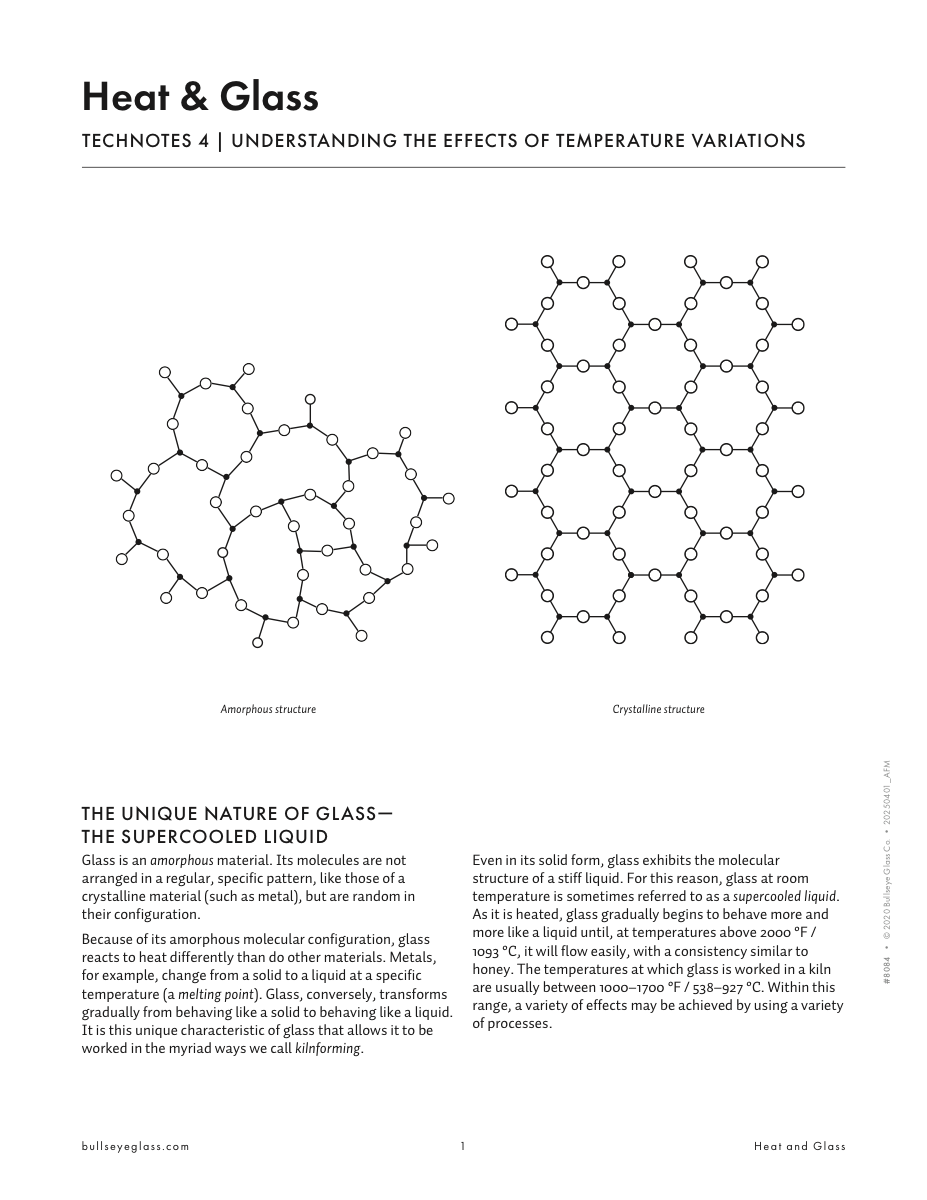
A fire polish aims to smooth a surface enough to reduce a frosted coldworked look, soften a sharp edge, or bring back a subtle gloss after grinding, sanding, or sawing. The piece should still read as the same object when it comes out of the kiln.
That difference matters. A full fuse asks layers to become one smoother mass. A slump asks gravity and a mold to change the form. Fire polish asks for a much narrower result: repair or soften the surface while preserving the design, dimensions, and shape as much as possible.
Before firing, name the surface problem in plain language. Is the rim too sharp? Is a saw mark too visible? Does a coldworked face need a slight gloss? The more precise the goal, the less likely you are to overheat the whole piece trying to solve a small surface issue.
Fire polish is a limited surface treatment, not a second chance to melt the piece into place.
02 / Heatwork risk
Too much polish can become unwanted movement.
The risk in fire polishing is that the same heat that improves the surface can also soften details, round edges too far, distort texture, or begin to change the shape. Small, thin, or delicate elements may respond faster than the area you are trying to polish.
Total heatwork still matters. Target temperature, hold time, approach rate, shelf position, kiln overshoot, and the mass of the piece all influence how much the surface changes. A schedule that only barely polishes one kiln load may over-soften another.
If you are polishing after coldworking, remember that the piece may have uneven thickness, stress history, or localized grinding heat from earlier work. The kiln schedule should respect the whole object, not only the surface you want to make shiny.
The correct fire polish is the smallest amount of heatwork that solves the surface problem.
03 / Edges and coldworked areas
Polish only works well when the preparation supports it.
Fire polishing is not a magic eraser for every coldworking mark. Deep scratches, coarse grinding marks, chips, or uneven edges may still show after firing, and adding more heat can damage the design before it fixes the preparation.
A better habit is to prepare the surface intentionally before the kiln. Work through appropriate abrasive steps, clean thoroughly, and decide whether a fire polish, hand polish, or additional coldworking is the right finish for the piece.
Edges deserve special attention. A lightly softened edge may be safer and more comfortable, but an over-softened edge can round beyond the design or change how the piece sits in a frame, stand, mold, or later assembly.
Good coldworking gives the fire polish less to fix and fewer reasons to overfire.
04 / Annealing after polish
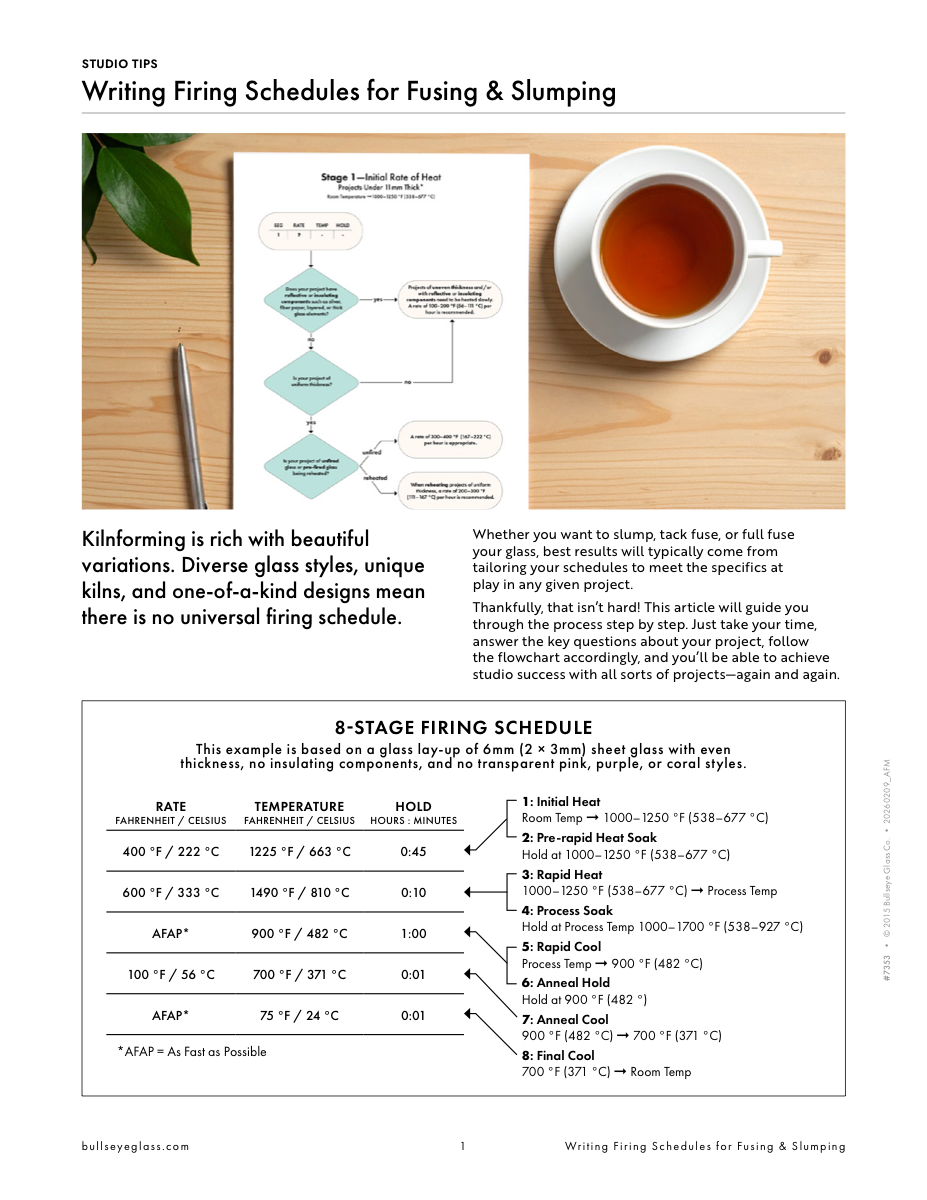
A surface firing still needs a safe cool.
Because fire polish often happens after the piece already looks finished, it is easy to think of it as a cosmetic firing. But the glass still expands, softens, contracts, and moves through stress-sensitive ranges.
Anneal for the actual object: its thickness, uneven areas, prior firings, coldworked edges, and intended use. A platter, thick tile, component, jewelry piece, or sculptural element may each need a different level of caution even if the visible goal is only surface gloss.
If the piece will be sold, worn, handled, shipped, or built into another work, do not treat cooling as an afterthought. The surface may be the reason for the fire polish, but structural stability is the reason the schedule has to finish carefully.
Fire polish improves the surface; annealing protects the finished object.
Studio notes
How to use this in the studio
Use these as practical prompts for a kiln log, a studio conversation, or your next firing test.
- Write down exactly what you are trying to polish before choosing a schedule.
- Do not use fire polish to hide poor preparation if deeper coldworking is needed first.
- Watch for unwanted rounding, texture loss, or distortion after even small increases in heatwork.
- Anneal for the piece you actually loaded, especially if it has thickness, relief, or prior firings.
Source references
Additional resources

One practical firing tip a week
Get a short glass-studio note in your inbox.
No spam — just one useful firing, glass, or studio-practice idea from My Glass Cookbook each week.
Your email is used for MGC studio notes. Read the Privacy Policy.