
When a new glass artist first looks at a firing schedule, it can feel like a recipe written by a machine: numbers, temperatures, times, and cryptic labels. But a schedule is not meant to be mysterious. It is simply a plan for moving glass through heat safely and predictably.
The important shift is this: a kiln schedule is not just the highest temperature you reach. It is the whole journey. The speed of the heat-up matters. The pauses matter. The cooling matters. The annealing matters most when the piece has any thickness, complexity, or sentimental value.
Once you understand that a schedule is a heat journey, the numbers become less intimidating. You can begin to ask useful questions: what is this segment protecting, what change is it trying to create, and where does the glass need extra time to even out before the next move?
01 / The core idea
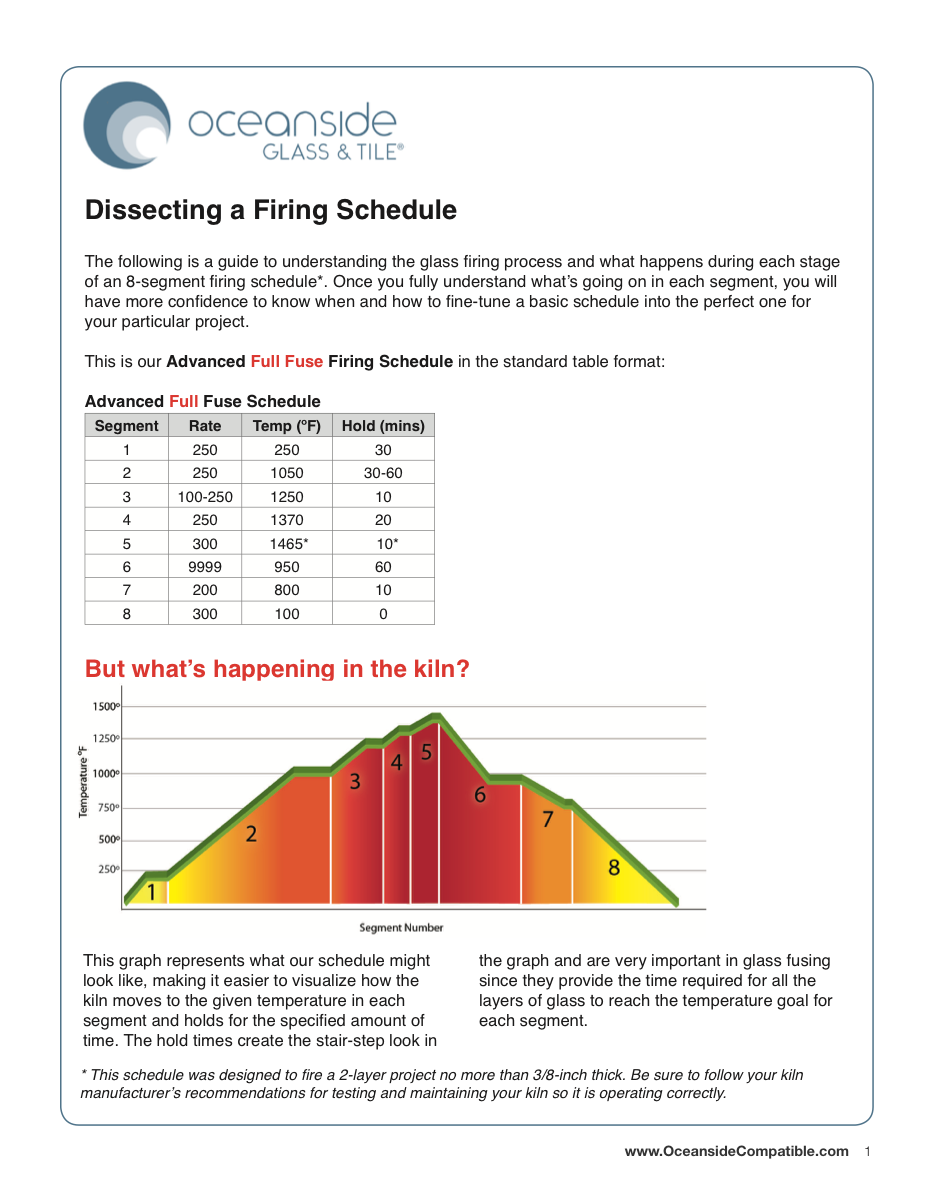
Think of a schedule as a curve, not a number.
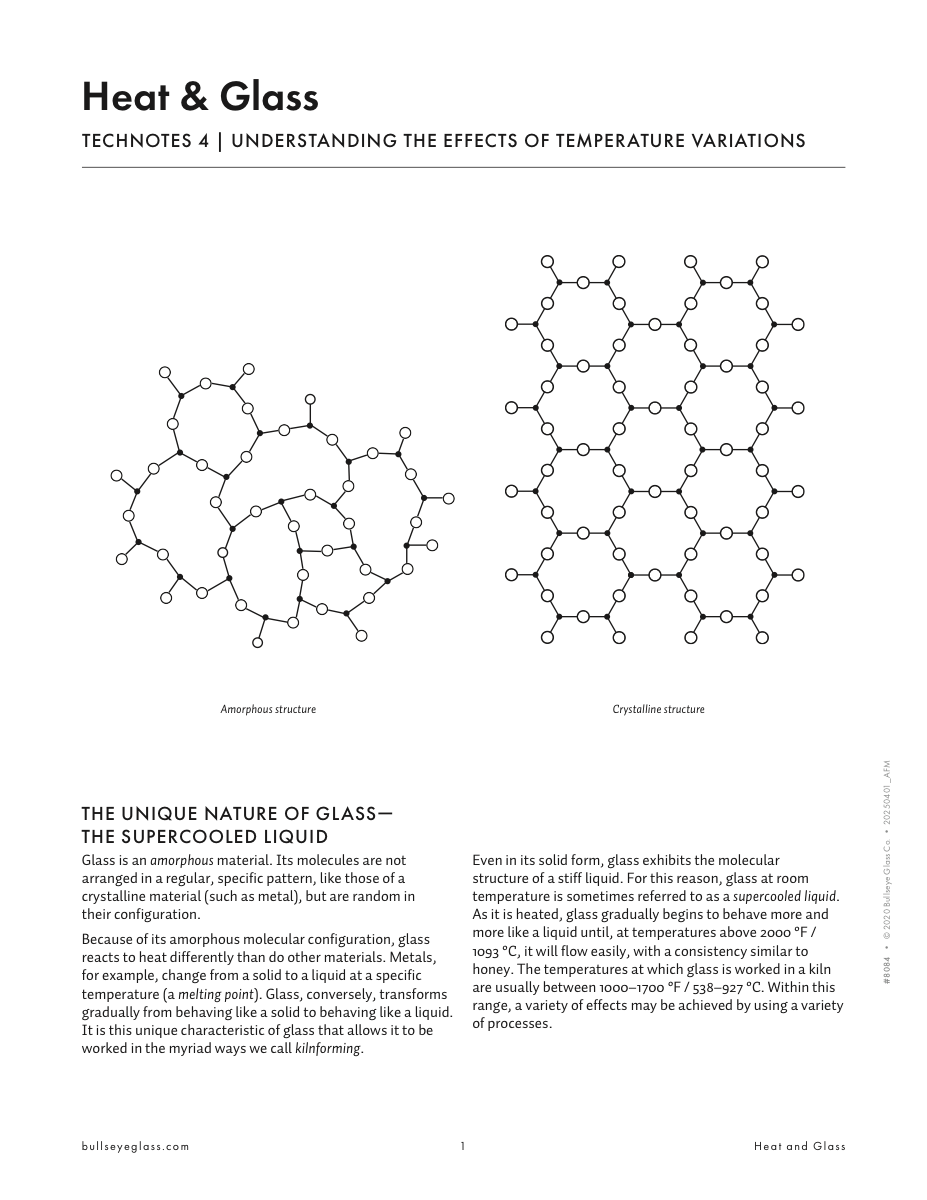
Glass responds to heat over time. Two schedules can both peak at the same temperature and still produce very different results if one gets there quickly and the other creeps up with long pauses. Heatwork is cumulative: temperature plus time plus the behavior of your specific kiln.
That is why schedule literacy starts with the shape of the curve. The line climbs when the kiln is heating, flattens when it is holding, drops when it is cooling, and slows down through the annealing range so internal stress can relax.
In the studio, that curve is also a record of intent. A gentle early climb says you are protecting the piece from thermal shock. A hold says you want temperature or behavior to even out. A controlled cool says the work may look finished, but the glass still needs care before it is safe to handle.
This is also why copying a single peak temperature from someone else rarely tells the full story. A cone, coaster, bowl blank, thick slab, or heavily textured piece might all visit similar temperatures, but the useful schedule is the one whose whole path matches the glass, thickness, setup, and desired result.
Studio translation: the peak temperature says “how hot”; the full curve says “how the glass got there and came back.”
02 / Why schedules exist
The kiln is solving several problems at once.
A firing schedule is trying to do more than melt glass. It protects the work from thermal shock, gives binders and moisture time to burn out, lets trapped air escape before the surface seals, reaches the right forming temperature, and then cools through annealing without locking stress into the piece.
For a simple two-layer coaster, the margin for error is usually forgiving. For a thicker casting, a textured panel, a piece with inclusions, or a form going into a slumping mold, the schedule becomes much more important.
Each part of the schedule is a response to a real material problem. Glass expands and contracts. Layers trap air. Kilns have hotter and cooler zones. Molds absorb heat. Shelves, fiber paper, primer, glue, and inclusions can all affect how the firing behaves. A schedule gives those variables a controlled path instead of leaving them to chance.
The goal is not to make every firing painfully slow. A good schedule uses patience only where the piece needs it. Some temperature ranges invite caution; others can move more efficiently. The more you understand the job of each segment, the easier it becomes to adjust with purpose instead of guessing.
A good schedule is not slow everywhere. It is careful where the glass needs care.
03 / What beginners should read first
Read every segment as an instruction.
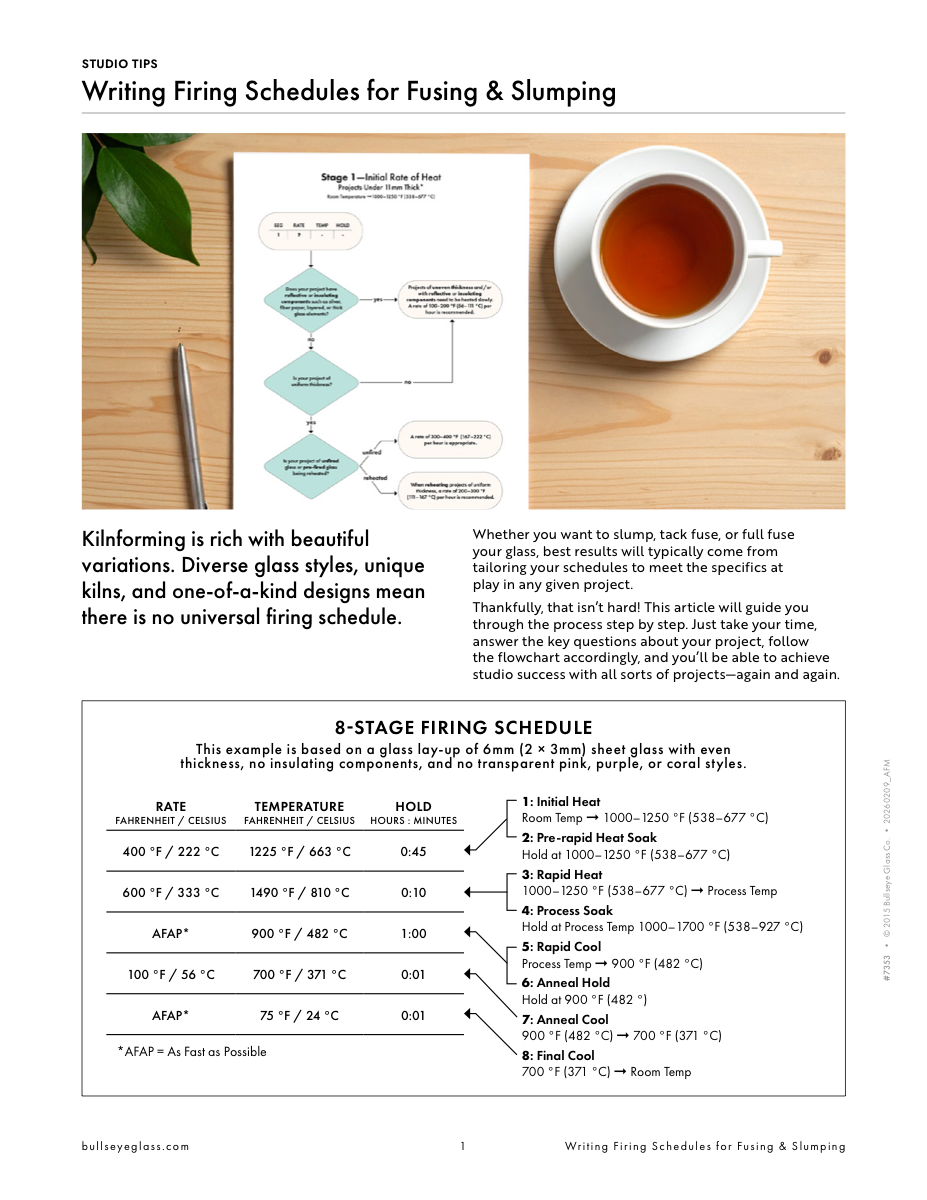
Most schedules are built from repeating instructions: heat or cool at this rate, go to this target temperature, then hold there for this amount of time. Once you can read those three pieces, the table stops looking like a code and starts looking like a map.
The safest habit is to read the schedule aloud as a story: “warm up gently, pause to even out, climb to forming temperature, hold just long enough, cool quickly to the anneal range, then slow down.” That story is what you will later turn into notes, tests, and adjustments.
When you copy a schedule into a controller, do not only check whether the numbers match. Ask what the kiln is being asked to do next. Is it climbing, holding, dropping quickly, or cooling under control? Is this segment about preventing shock, clearing bubbles, forming the glass, or relieving stress?
That habit makes troubleshooting more specific. If a piece over-fired, under-fired, trapped bubbles, cracked, or slumped too far, you can look back at the segment most likely to have shaped that result. The schedule becomes a conversation with your kiln rather than a mysterious table of numbers.
If you can explain the purpose of each segment, you are no longer just copying schedules — you are learning from them.
Studio notes
How to use this in the studio
Use these as practical prompts for a kiln log, a studio conversation, or your next firing test.
- Use manufacturer schedules as starting points, not universal promises.
- Keep a kiln log: glass type, thickness, mold, shelf position, schedule, result, and what you would change next time.
- Treat annealing and cooling as part of the firing, not the boring part after the firing.
- Make one change at a time when testing so the result teaches you something.
Source references
Additional resources
One practical firing tip a week
Get a short glass-studio note in your inbox.
No spam — just one useful firing, glass, or studio-practice idea from My Glass Cookbook each week.
Your email is used for MGC studio notes. Read the Privacy Policy.