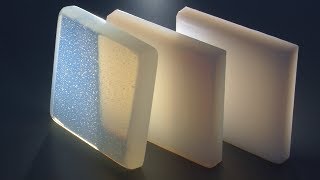
There are many options for finishing glasswork once it has come out of the kiln. You can use expensive machines to cut, carve, grind, and polish work. Or you can achieve these results simply, effectively, and inexpensively by coldworking with loose grit. (Loose grit is composed of particles of abrasive media, in this case silicon carbide, the same material typically found on wet/dry sandpaper.) In this lesson you will learn the advantages of working with loose grit over fixed-abrasive machinery, how to set up a grinding station, how to grind glass with loose grit, and different finishes you can achieve.
Watch on My Glass Cookbook
Coldworking with Loose Grit
There are many options for finishing glasswork once it has come out of the kiln. You can use expensive machines to cut, carve, grind, and polish work. Or you can achieve these results simply, effectively, and inexpensively by coldworking with loose grit. (Loose grit is composed of particles of abrasive media, in this case silicon carbide, the same material typically found on wet/dry sandpaper.) In this lesson you will learn the advantages of working with loose grit over fixed-abrasive machinery, how to set up a grinding station, how to grind glass with loose grit, and different finishes you can achieve.

Keep watching
More from Bullseye

Glass Cutting
Want to learn how to cut glass? This video on Glass Cutting Basics introduces essential techniques for cutting sheet glass cleanly and accurately—perfect for both beginners and experienced kilnformers. Learn the tools and tips you need to shape glass for your kilnforming projects with confidence.

Slumping Basics
Using heat and gravity, art glass can be shaped over and/or into molds in a kiln to create an almost endless variety of forms. In this lesson you will learn about glass “slumping” methods, with a focus on using commercial ceramic molds.

Considerations for Multiple Firings
In this lesson, we will cover strategies for successfully reheating pre-fired work, the cumulative effect of heatwork on glass, and how to anneal works that have been fired multiple times. We will also look at some special considerations.